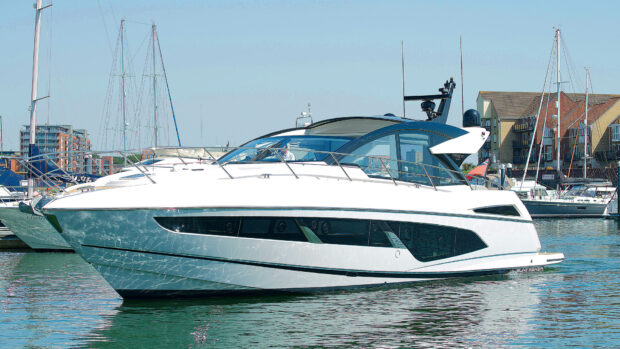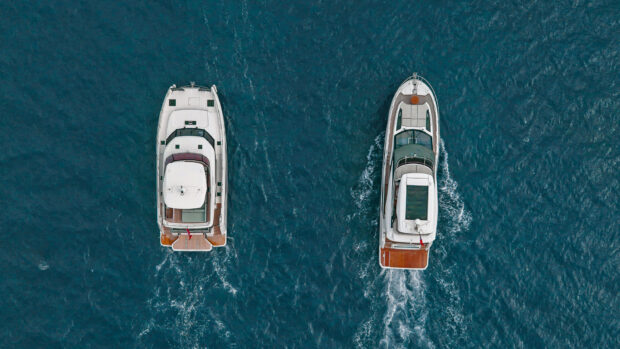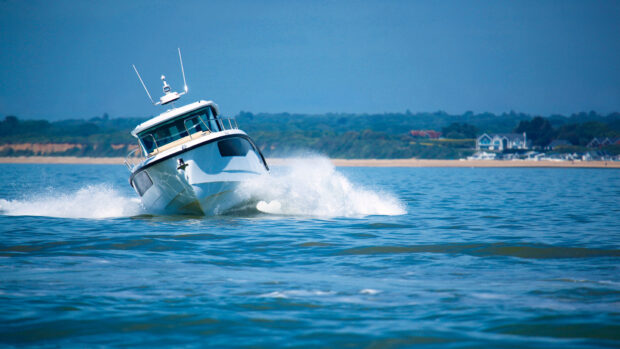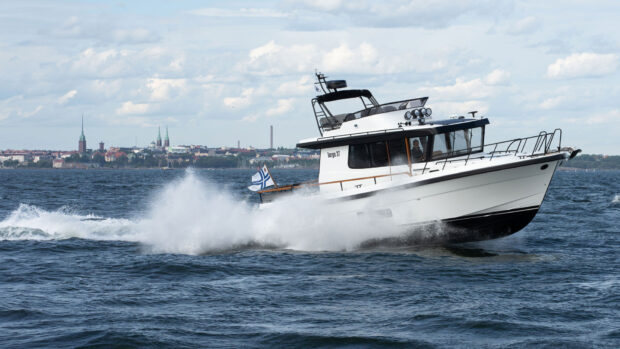


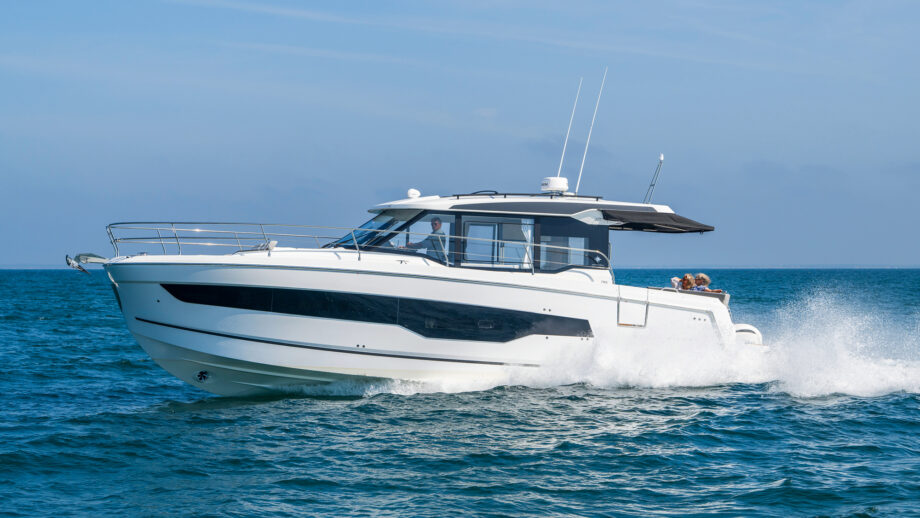
What do you get if you turn a brilliant flybridge cruiser into a coupé? We head for Cannes to test the Jeanneau Merry Fisher 1295 Coupé and find out...
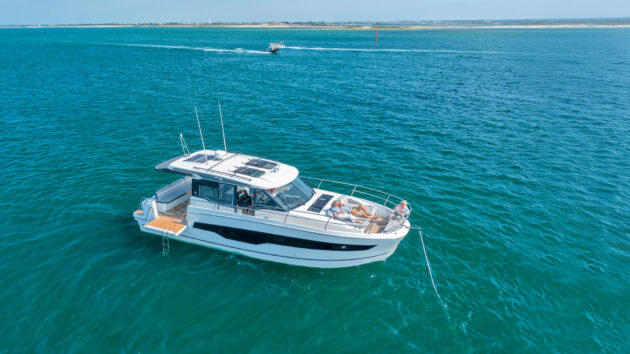
When we tested the flybridge version of the Merry Fisher 1295, we thought it was a tremendous boat – probably the best and most broadly talented boat of its size and price in the world. So why chop off the roof and introduce a coupé version?
Well believe it or not, there are a few reasons. Reduced bulk for uprated style. Reduced weight and windage for improved performance, efficiency and handling. A reduced price – usually of between 4 and 7% – but in this case, closer to 8%. A saloon with extra brightness and a roof structure that can be used for more because it’s freed of the requirements imposed by a flybridge. And the luxury of being able to get in and go – and get back and leave – without having to mess about with cushions and covers.
True, you do tend to lose the second helm, as well as the top deck, that a flybridge model provides, and the 1295’s upper level really is a very worthwhile day space. But by the standards of a 41ft cruiser, the Coupé model certainly doesn’t struggle in that regard…
Cockpit and foredeck
The long deck saloon superstructure, positioned a good way aft, means that the open cockpit is relatively short but, as on its sister model, the space is cleverly used. The cockpit’s aft bench, for instance, pushes way back above the engine well, significantly extending the usable space. When you’re finished for the day, runners in the deck then enable you to slide it forward so you can trim the engine legs out of the water.
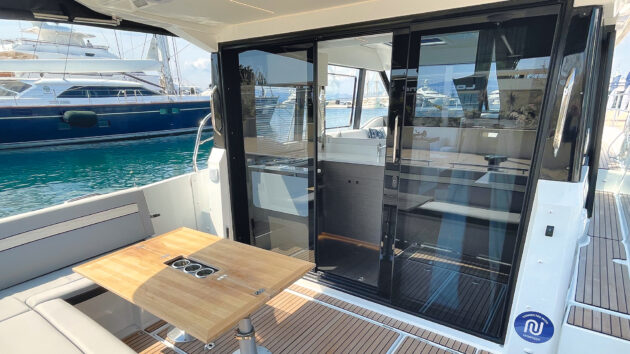
The absent ladder is great for the 1295’s short cockpit
The flybridge ladder is of course gone, and that helps free up a little more space back here, while also ensuring that you get immediate access to the storage lockers beneath the deck without having to shift the ladder struts from the hatch.
The asymmetrical nature of the broad L-shaped bench is also well managed. There’s a drop-down terrace on the starboard side, ahead of a walkway to join the aft swim platforms to the cockpit. But Jeanneau has helped mitigate the limitations of this single dedicated access point by means of a side gate to port as standard, plus a neat little lift-out backrest in the port corner so you can rig a little channel through to that side of the swim platform.
In the absence of inboard engines, the storage beneath the deck is also fantastic. There’s enormous volume and it’s really well arranged with a deep central cabinet and a pair of smaller compartments, one on either side. And if you look forward a touch, just beyond the single-level threshold at the aft end of the saloon, you will find another under-deck locker of a very similar size.
Arguably though, the best day space on this Coupé model is to be found at the bow. The fact that the screen brings the superstructure to an end a decent way aft creates plenty of length up here as well as breadth, and it’s beautifully used. There are three long, forward-facing sun loungers with raised backrests and integrated armrests.
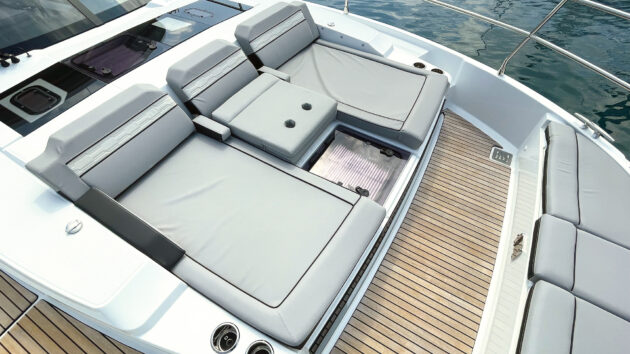
The spacious and practical six-man bow lounge is a triumph
Ahead of that is a broad aft-facing bench at the squared-off forepeak, which is big enough to seat another three people – and the fact that the transverse walkway between the two sections is sunken deep creates a very natural place for your feet when you’re sitting at the bow table.
It’s a highly practical arrangement too. For instance, that same sunken section of deck creates the space for a long letter-slot window built into the leading edge of the sunbed structure for extra light down below. The generous length also means you get four skylights ahead of the screen, which funnels plenty more natural light into the bow cabin, whether the six bow seats are occupied or not.
And if your guests do happen to be embroiled in a six-person foredeck party, there’s some handy tread machined into the fibreglass of the coachhouse roof, between the hatches and the sunbed backrests, so you can make your way from one side to the other without getting in anybody’s way.
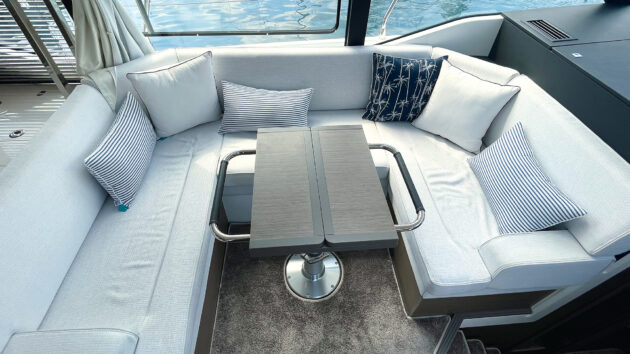
Plunging windows and a low-slung dash enable excellent views
Simple saloon
As intimated, any worthwhile coupé model needs to really make the roof work hard and the 1295 makes a very decent fist of it. There’s the option of a big roof rack for a whole collection of toys. There’s also space up here for solar panels so you can keep your domestic batteries topped up; and the sunshade extension that comes off the back end of the roof structure can be coupled with an optional cockpit closing kit to keep the entire aft end properly sheltered.
There are a couple of skylights above the helm to brighten up the saloon too but you can’t help feeling that a larger single sunroof might have been a more productive way to really leverage the potential benefits of the Coupé’s roof structure.
Even so, the overhead light does make the saloon feel subtly more pleasant and the near-identical layout also works well. Once again, the raised port side deck is kept nice and narrow (about the width of a single foot in fact) to generate excellent internal breadth and that’s used for a sociable C-shaped galley to port and a single step up to the forward part of the saloon, where a low-slung C-shaped dinette mirrors the aft set-up and enjoys big views through plunging side windows.
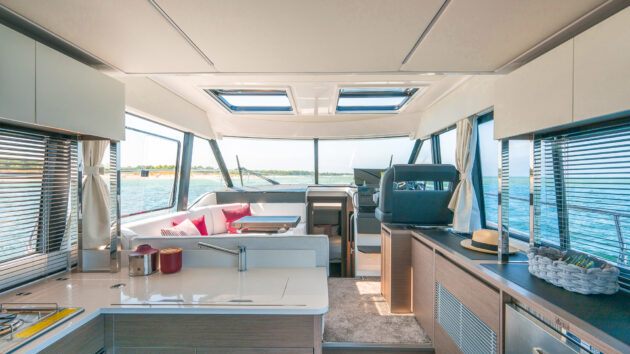
While it’s brighter than the fly model, more might have
The dash structure is also quite low-slung, which means you get excellent forward views from the dinette seating, even when you’re underway on a cruise.
As part of the optional Premier Pack, there’s an opening port window here for ventilation and communication but it doesn’t line up with the midships cleat so while it’s certainly worth having, its seamanship credentials are slightly limited. But even so, the skipper’s side door and broad starboard side deck help make up for that. And the fact that the refrigeration duties are taken care of in the form of low-level units beneath the worktop on the starboard side also helps preserve easy movement and all-round views.
You get 144L of refrigeration capacity across two fridges and there’s plenty of space here for an ice-maker too, should you want one. And when you step down the forward steps, between the port dashtop’s pop-up TV and the starboard helm, the three-cabin lower deck layout feels really strong for a boat of this size.
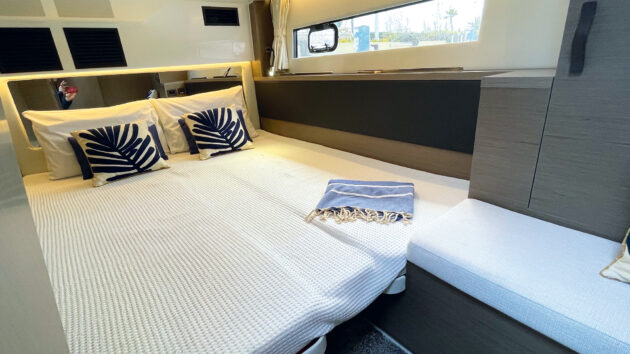
The short day heads allows for a longer port twin
Three-cabin layout
The owner’s bow cabin is every bit as bright as the foredeck arrangement suggests it ought to be, and it feels all the more so because of the big hull windows. It’s voluminous, too, thanks to the hull’s softly angled taper, which enables you to gain full access on both sides of the bed, even though it’s positioned quite low down for outstanding headroom.
In fact, there’s plenty of space to sit up in bed, even beneath that deep-set forepeak lounge. There’s plenty of storage space beneath the bed too, and the detailing, not least in features like the stylish backlit bed head, feels a cut above the original flybridge model.
Rather impressively, there are two bathrooms here. The owner gets direct access to a long starboard ensuite with separate shower, and on the port side, there’s also space for a shorter but equally practical day heads. Aft of these, the beam is sensibly divided between a pair of guest cabins.
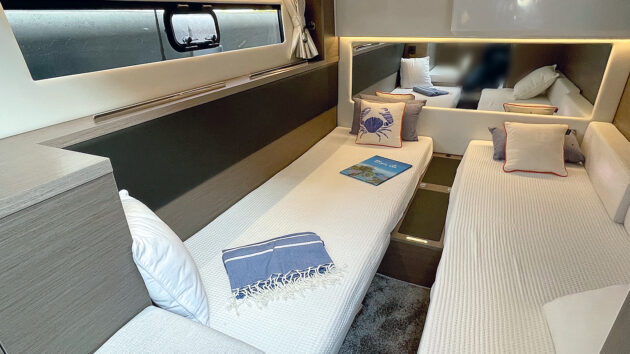
Lots of light and headroom, even to starboard
There’s a really good sized twin to port with an infill so you can turn it into a huge double. It comes with a really lofty changing zone and plenty of volume beneath the saloon deck to sit up in bed, plus impressive storage and good light and views through deep hull windows. The starboard twin is shorter, but it too provides all the key ingredients you would want, not just to spend the night but to linger a little with a cup of tea in the morning.
Easy underway
As on the flybridge model, triple 300hp outboards are the only option here, but you can go for either the test boat’s Yamahas or the optional Mercurys. Either way, what we’re seeing is remarkably similar to the 1295 Fly. So much so that we’re not actually recording any clear and obvious speed or efficiency gains, and in spite of the fact that we’re a little more heavily loaded, with six crew and relatively full tanks, that’s a bit of a surprise.
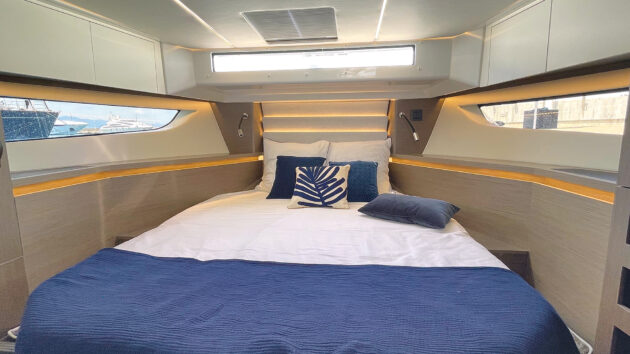
Spacious owner’s cabin
Nonetheless, the general performance is very strong indeed. From the solid directional tracking, through the flat transition to a low-speed 16-knot plane and on to the top end of around 37 knots, it all feels extremely well sorted.
There’s good composure, grip and speed retention in the turn, as well as attractive vigour in the regaining of its natural trim when you straighten up the wheel. Running efficiency is also decent in the chief cruising band from 20 to 30 knots, where 5 to 6L per mile delivers a range of between 160 and 200 miles. It’s quite a quiet boat too – slightly more so in fact than the fly model, with sound readings of 70-75db at everything from 20 to 30 knots. And the ergonomics also feel pretty strong…
While the helm station has to be compact to free up space for the big port dinette and the access point to the lower deck, you get a really wide skipper’s side door and very narrow mullions for excellent visibility, plus space for two 12in MFDs on the main tier of the dash and excellent travel on the adjustable helm seat.
That helm seat also rotates to face across to the rest of your guests and, while we would favour relocating the tabs switch so you don’t have to reach beyond the throttle lever to access it, this is about as positive a helming experience as you could possibly want from a high-volume, outboard-powered six-berth family cruiser.
Jeanneau Merry Fisher 1295 Coupé specifications
LOA: 40ft 9in (12.41m)
BEAM: 12ft 6in (3.80m)
DRAFT: 2ft 6in (0.76m)
DISPLACEMENT: 8,181kg plus engines
FUEL CAPACITY: 1,174 litres
ENGINES: Triple Yamaha F300 4.2L V6 outboards
RCD: B10-C12
Jeanneau Merry Fisher 1295 Coupé costs and options
From: £482,804 inc VAT. Test boat includes the following options…
Aft cockpit sun awning: £2,692
Cockpit closing kit: £3,398
Roof rack: £897
Upgraded electronics pack: £8,579
Bow thruster: £3,600
Diesel heating: £11,181
 If you enjoyed this….
 If you enjoyed this….
Motor Boat & Yachting is the world’s leading magazine for Motoryacht enthusiasts. Every month we have inspirational adventures and practical features to help you realise your sailing dreams, as well as tests and news of all the latest motorboats.
Plus you’ll get our quarterly Custom Yachting supplement where we share the last on offer in the superyacht world and at the luxury end of the market.
Build your knowledge with a subscription delivered to your door. See our latest offers and save at least 30% off the cover price.
Note: We may earn a commission when you buy through links on our site, at no extra cost to you. This doesn’t affect our editorial independence.