
Lots of us fantasise about buying a thoroughbred sportscruiser for less than the price of a Ford Fiesta, but Paul Fareham actually did. Was the reality a dream come true or a nightmare in waiting?
When people hear that I bought a 34‑foot Sunseeker for £13,000, their reactions tend to fall into two categories. The first group thinks I’m lying. The second thinks I’ve bought a floating disaster. In truth, it was somewhere between the two: a genuine bargain wrapped in years of neglect, questionable repairs and the kind of mechanical surprises that only reveal themselves once you’re too far in to back out.
But that’s the point of this story. In a market where even tired petrol-powered 30‑footers are advertised for north of £50k, the idea of buying a fast, capable, twin‑diesel sportscruiser from a brand with the pedigree of Sunseeker for £13k sounds impossible – unless you’re willing to do the work yourself.
If you have the skills, the tools and the patience, there are still opportunities out there. They’re just disguised as problems! That said, it’s important to approach this with the full understanding that you are buying a liability rather than an asset. You have to make it into an asset.
And before you leap to the conclusion that it’s easy for me to say that, as I must be a trained mechanic, I am not and never have been. However, my career did include 27 years in the Ambulance Service, which does at least make me a good problem solver. This coupled with a passion for boating led me down the path of boat restoration both as a hobby and as an affordable means of going boating.
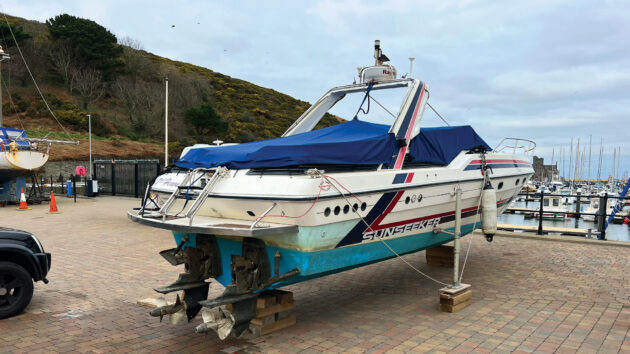
Before purchase. Photo: Paul Fareham
Bargain baggage
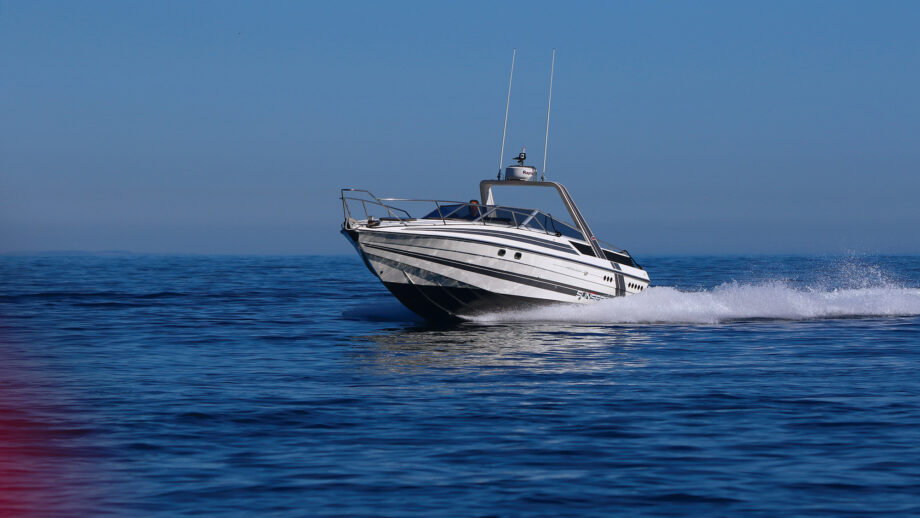
The Sunseeker XPS 34 is a bit of an 80s legend, a bona fide classic with a true performance hull designed by the legendary Don Shead. That meant a proper deep V-hull shape, a long foredeck and the kind of stance that promises speed even when sitting on the pontoon. Originally, it would have been fitted with a pair of petrol-guzzling V8s but the one I stumbled across had been refitted with a pair of more modern Volvo Penta KAD 44 diesels in 2000. On paper, it was everything I wanted.
In the flesh, it was… well, let’s call it “honest.”
You have to start with a boat that motivates you. It’s a bit like buying a classic car or bike – you know it’s going to soak up large amounts of time and money so it needs to energise you. This boat did, so I bought it.
Every project boat owner goes through the same emotional cycle; first excitement, followed by concern and then denial until finally you reach the inevitable conclusion and acceptance that the only way forward is to strip everything down and rebuild it properly. I have learned that if you assume nothing is in good working order, you won’t be disappointed when it isn’t.
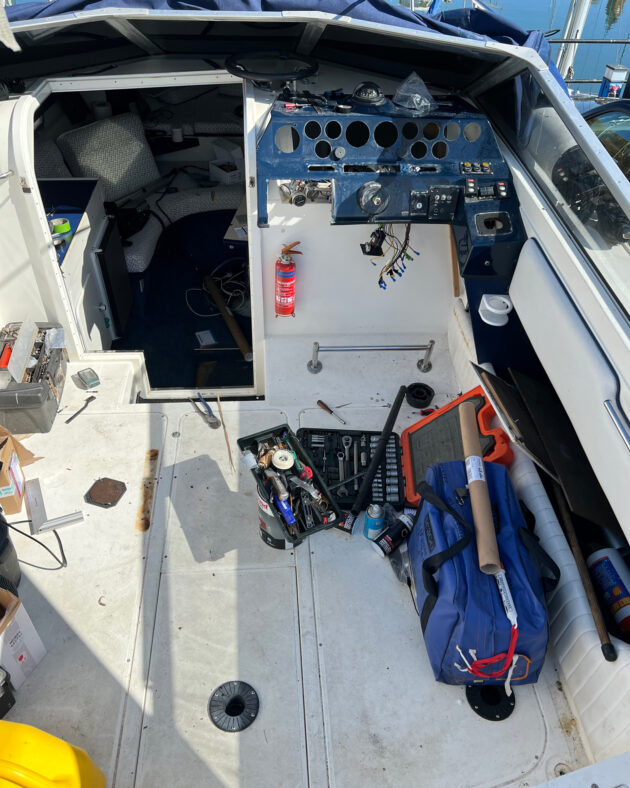
The helm was just one of the many areas he worked on. Photo: Paul Fareham
The first few weeks were spent crawling through bilges, tracing wires, checking compression and making lists. Lots of lists.
The more I looked, the more I realised that while the boat had its fair share of issues, it wasn’t a lost cause – simply a victim of years of “that’ll do” maintenance.
The engines ran but the cooling systems were clogged with scale. The turbos had excessive play. The elbows were corroded. The injectors were suspect. A previous sump repair was a crime against engineering. The wiring was a fire hazard and an old transducer hole in the hull had been repaired with a bolt and rubber washer! But none of this scared me because if you can do the work yourself, the economics change completely.
Engines out
There’s a moment in every restoration where you fully commit. For me, it was the day I lifted the engines out. Having survived four previous boat projects, I had come to the conclusion that access is the main killer of motivation. Crawling around engines trying to remove components soon drains any enthusiasm you once had, so I hired a barn, brought in a HIAB and spent a long day disconnecting everything: fuel lines, exhausts, wiring looms, cooling hoses, mounts and the stubborn bolts that always seem to be placed by someone who hates the next person that might need to undo them. With the engines now hanging in the air, dripping old coolant and diesel, I knew there was no turning back.
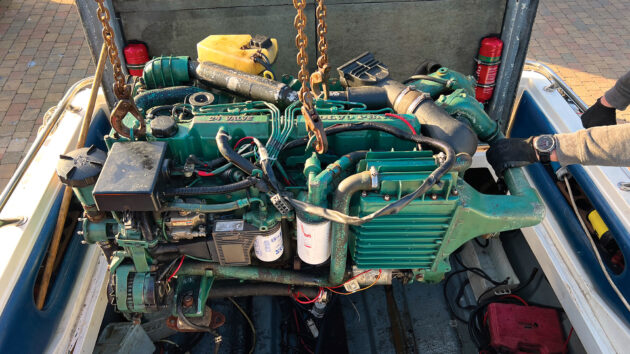
Lifting out the two Volvo Penta KAD 44 diesels at the start of the engine rebuild project. Photo: Paul Fareham
It was time to strip them down, assess what needed doing and either repair or replace anything worn or damaged. All the main internal parts like the pistons, cylinder bores and cranks looked fine. The seawater cooling systems not so much. Years of salt, scale and neglect had left them partially blocked. I stripped out everything: the heat exchangers, aftercoolers, oil coolers, raw‑water pumps and all the hoses and clamps.
Every component was cleaned, descaled, pressure‑tested and rebuilt with new seals. The raw‑water pumps got new impellers, bearings and wear plates. This alone would have cost thousands of pounds in labour at a yard. I spent a few hundred on parts and a few weekends of graft making sure I followed the workshop manual.
Both the turbos were tired – not destroyed but badly worn. In my experience, having turbos rebuilt is a fool’s errand so I replaced them with new ones. The internet is your friend when sourcing parts. For example, a new turbo from the actual manufacturer of the part is half the price that the OEM will sell it to you for, even though it’s the exact same unit.
In the meantime, I sent the injectors off for professional servicing. While they were away, the heads went off for a skim and the valves were cleaned, reground and fitted with new oil stem seals.
The sump was a complete disaster zone. For some inexplicable reason a previous “mechanic” had sandblasted it and wrapped it in fibreglass. To this day I still don’t understand why but can only assume it was a misguided attempt at stopping a persistent oil leak. When I finally removed all the fibreglass and then the sump itself, I could see nothing that a new sump gasket wouldn’t have sorted. However, not wanting to take any chances, I sourced a secondhand sump in excellent condition and replaced it for peace of mind.
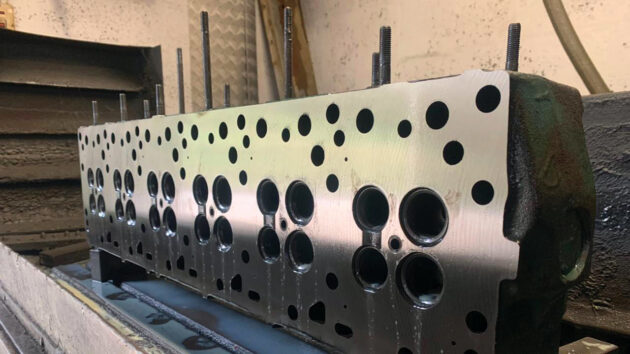
The heads were skimmed and the valves reground and fitted with new oil stem seals. Photo: Paul Fareham
With the engines out, I tackled the engine bay itself. It was filthy from years of oil mist, dust and overspray. I degreased it, sanded it, primed it and painted it in a clean, bright finish that makes leaks easy to spot. A clean bilge is a must in my book. How else can you tell if you have an oil, seawater or coolant leak? Once mixed in with all the other grime, they all look the same.
Then it was onto the outdrives – the devil’s egg whisks as someone once called them. It’s always an emotional moment when you undo the oil drain plug to see what comes out. Cream (emulsified oil and water) would have been upsetting but fortunately the oil was clean and clear. They were in good condition, as were the stainless-steel props so I stuck with a standard service and re-antifoul. It’s worth mentioning that I always stick to OEM parts for this. The seals and driveshaft bellows are critical components so aftermarket alternatives are just not worth the risk for the relatively small price difference.
The wiring was a mess; four batteries, five isolators, countless random fuses, cable runs that made no sense. I ripped everything out and started again. The shorter the cable runs, the less resistance there will be. It’s a very simple concept that many boat builders seemed to ignore back in the 1980s.
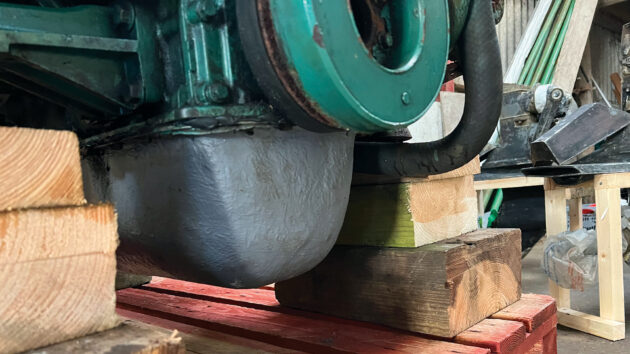
The previous fibreglass sump ‘repair’. Photo: Paul Fareham
I installed Albright heavy‑duty remote isolators, properly sized marine‑grade cable with logical routing, clear labelling, a new VSR system and a modern battery charger. The result is a system I trust – no mystery wires, no bodges, no surprises.
You have to take a common sense approach to interior renovation. I try to avoid removing any items that are sound and well made, but find ways to modernise and elevate them instead. Vinyl wrap is extremely useful for hard surfaces. It can cover a multitude of sins from the 1980s and can be removed in moments should you or anyone else decide to change it again in the future. I opted for a simple grey wrap that looked fresh, modern and inoffensive.
Shades of grey
Lighting is also vital, and replacing the old energy-hungry halogens with warm‑white LEDs was a no-brainer – lower power draw, better light and more modern styling. LED strip lighting was another game-changer that really lifted areas via backlighting.
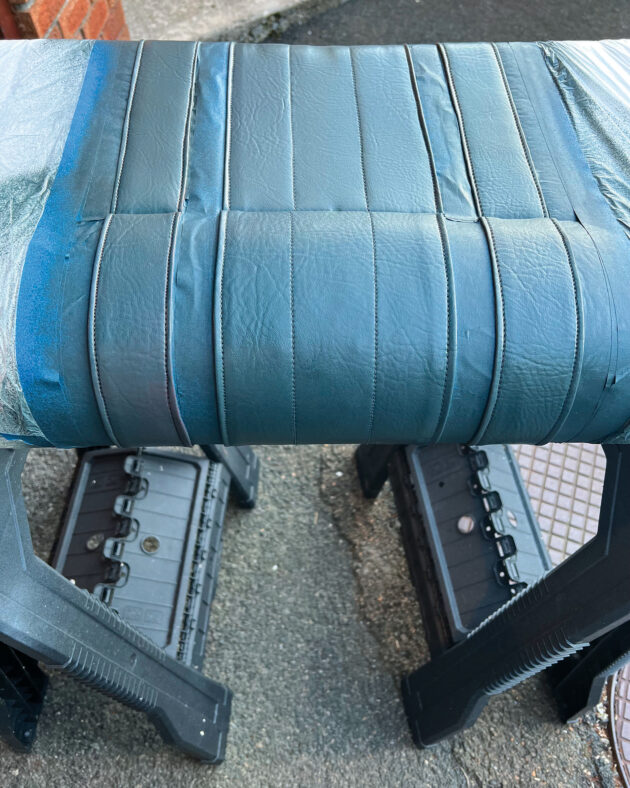
Tatty blue upholstery was freshened up with vinyl spray dye. Photo: Paul Fareham
In my experience, if you want support for boating activities from your significant other, get the toilet facilities right, hence the reason I splashed out on a new electric flush toilet.
The classic red and blue hull stripes are classic Sunseeker but looked too dated for my liking. All it needed was some careful preparation, masking tape and decent two-part marine paint. With the hull stripes repainted in grey, the cockpit cushions needed a similar makeover. Once again the masking tape came out along with some grey coloured vinyl spray dye. The result, modern but still classic upholstery for rattle-can prices.
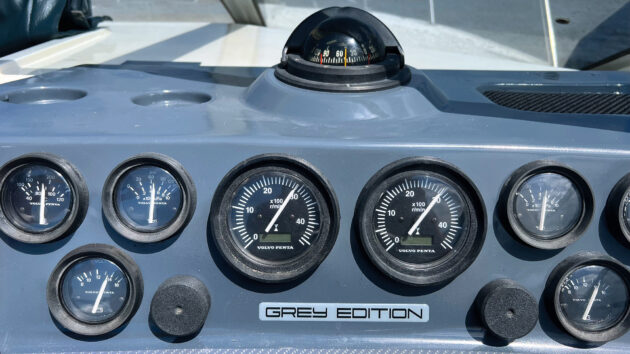
Bespoke graphics and carbon fibre effect wrap add a final flourish to the new look helm. Photo: Paul Fareham
Keeping with the grey theme, I replaced the old black race frame helm seats with stylish new bucket seats featuring a splash of grey and added some matching EVA foam decking to the cockpit floor for a combined cost of just £450. The folding cabin doors were solid, well-made items so I simply primed and sprayed them a darker grey for a bit of contrast.
Finally, the heavily corroded switch panels needed replacing so using 3mm aluminium plate, grey carbon wrap and inkjet printable transparent sheets, I cut them to shape, printed out my chosen text and logos and coated them with a clear top layer, all for a few pounds.
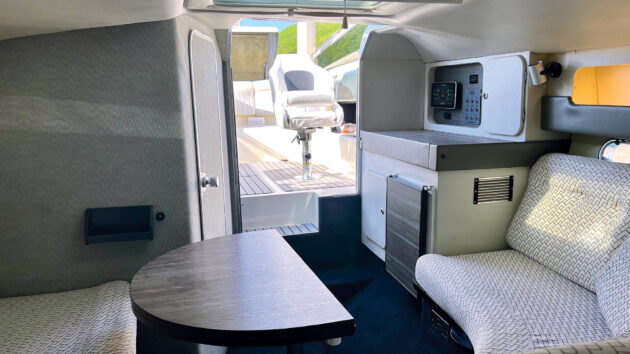
Refreshed upholstery and judicious use of vinyl wrap lifted the interior. Photo: Paul Fareham
The moment of truth
After three months of continuous evenings and weekends rebuilding and repainting them, the engines were finally ready to go back in. I aligned the mounts, connected the systems, bled the fuel lines, and turned the keys. They fired instantly. No smoke. No hesitation. Just the deep, confident thrum of two diesels that had been given a second life. It’s moments like this that make projects so addictive. It’s the payoff for every scraped knuckle, every late night and every moment of doubt.
After such extensive works it’s vital to sea trial the boat thoroughly before attempting a longer passage with friends and family. Build up slowly and constantly check everything you’ve done. My eyes were glued to the temperature and pressure gauges at all times.
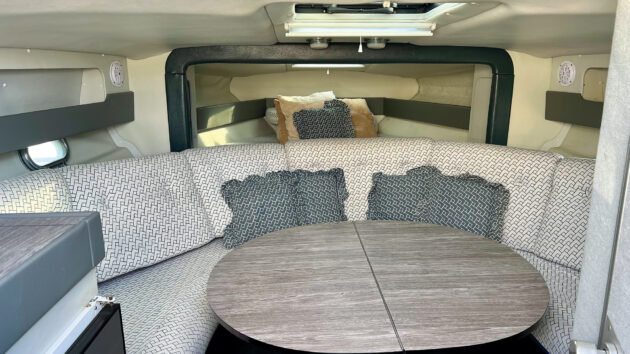
You’d never know it’s nearly 40 years old from the way it looks now. Photo: Paul Fareham
Over a period of two weeks, I found and resolved a few minor issues such as small hose leaks and an exhaust bellow on the outdrive that I hadn’t tightened enough so that was a refreshing dip into the harbour to pop it back on! Once confident, it was time to unleash her. Straight out the gate, she flew to 40 knots, eventually topping out at 45.
Emotions at this point are always mixed. Pride at a job well done, excitement of the boating adventures to come, disappointment as I’ve got nothing else to fix and curiosity at what else might be out there. Eventually, curiosity killed the cat, or rather my ownership of this fine craft. After some wonderful times out and about around the Isle of Man, I sold Xcess to a new owner to help fund a new boat project. But that’s another story!
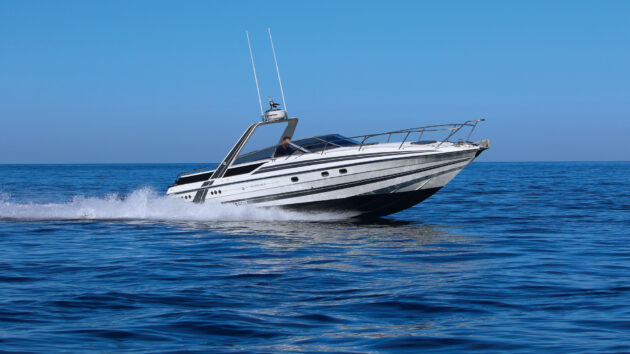
Straight out of the gate she flew to 40 knots, eventually topping out at 45. Photo: Paul Fareham
Final thoughts
Boating has become expensive. Too expensive, in many cases. But the path to affordable boating still exists, it just requires effort. The key is research. The internet is a wonderful thing but can also be filled with opinions rather than knowledge. I have been a member of the motor boat forum on MBY.com for almost two decades and it’s still my go to for questions, technical knowledge and humour. I would recommend joining it to anyone wanting to learn more about things that float (and avoid those that don’t).
If you lack the skills, the time, the tools or the patience, then £13k buys you a headache but if you do have them, or at least the willingness to learn them, then £13k buys you a boat you could never otherwise afford, a project that becomes part of your life, a machine you understand intimately and a sense of pride no amount of money can buy. £13,000 didn’t buy me a perfect boat but it did buy me the chance to create one.
 If you enjoyed this….
 If you enjoyed this….
Motor Boat & Yachting is the world’s leading magazine for Motoryacht enthusiasts. Every month we have inspirational adventures and practical features to help you realise your sailing dreams, as well as tests and news of all the latest motorboats.
Plus you’ll get our quarterly Custom Yachting supplement where we share the last on offer in the superyacht world and at the luxury end of the market.
Build your knowledge with a subscription delivered to your door. See our latest offers and save at least 30% off the cover price.
Note: We may earn a commission when you buy through links on our site, at no extra cost to you. This doesn’t affect our editorial independence.