
When Steve Jordan saw the £4,750+ VAT quote for a traditional bow thruster, he decided to engineer a revolutionary Waterjet alternative himself
When Steve Jordan decided to fit a bow thruster to his 28ft sportsboat, he couldn’t get over the cost of it. The cheapest quote for installing one came to £4,750 plus VAT. Faced with this, most of us would have either stumped up the cash through gritted teeth or carried on without one.
Being the director of an engineering company, Steve wasn’t so easily defeated. After all, how hard could it be to push the bow of a boat sideways? The more he thought about it, the more flaws he saw in traditional bow thruster designs. As well as being costly to buy and time consuming to install, they are often noisy, prone to overheating and vulnerable to fouling and corrosion. Moreover, if anything goes wrong, it usually involves lifting the boat to fix it.
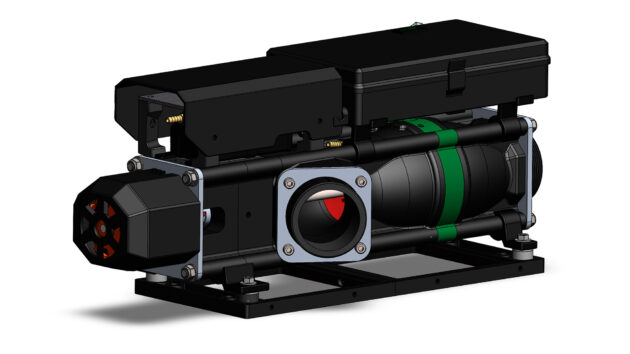
The Marine Sidejet uses a compact electric waterjet mounted above water level
Easy installation
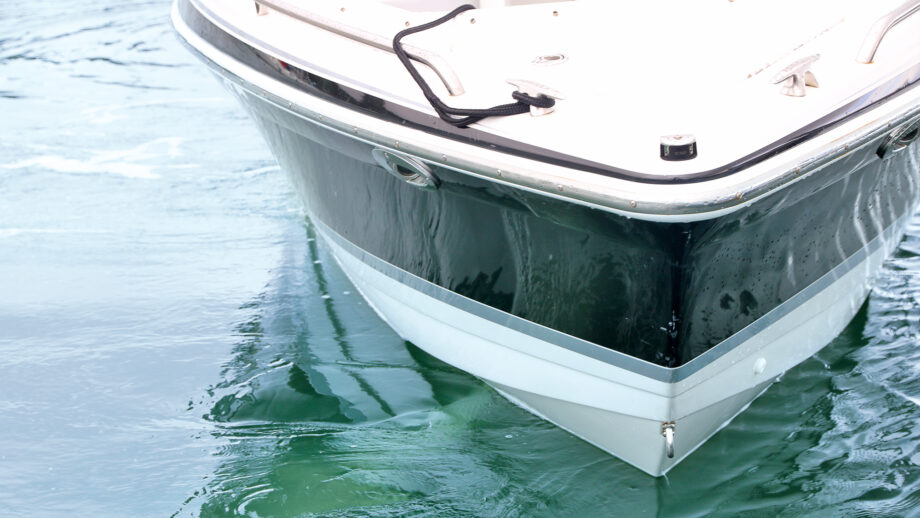
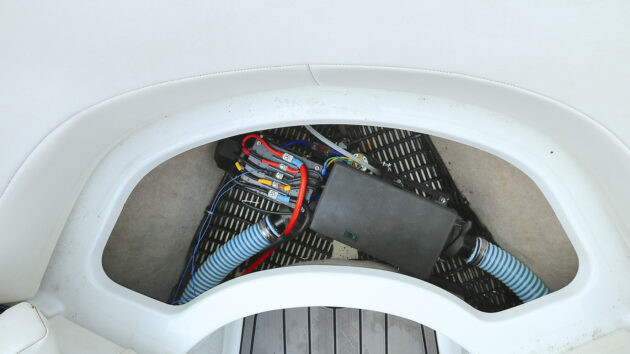
The solution that he and his colleague Alan Meeks from GTD-Group came up with is as simple as it is elegant. Called the Marine Sidejet, it is uses a compact two-way waterjet mounted in a sealed unit above the waterline. This is connected to a pair of flexible pressure hoses attached to skin fittings on either side of the bow.
Run the jet one way and it sucks water in from one side and ejects it out the other, pushing the bow in the opposite direction. Run the jet the other way and everything reverses, pushing the bow in the other direction.
This has a number of tangible benefits. First, it makes the installation process quicker and easier.
Fitting a conventional bow thruster involves drilling a large, perfectly straight hole through both sides of the bow and glassing in a tunnel between them.
Article continues below…
It’s a major job with structural implications that is well beyond the reach of most DIY boat owners. Fitting a Marine Sidejet is a much simpler proposition because the holes are smaller (2-2.5in), linked by flexible hoses and made watertight simply by tightening the two halves of the skin fittings supplied.
The Sidejet itself is a compact plug and play unit weighing around 4kg that can be mounted anywhere nearby regardless of orientation, provided it’s above the waterline.
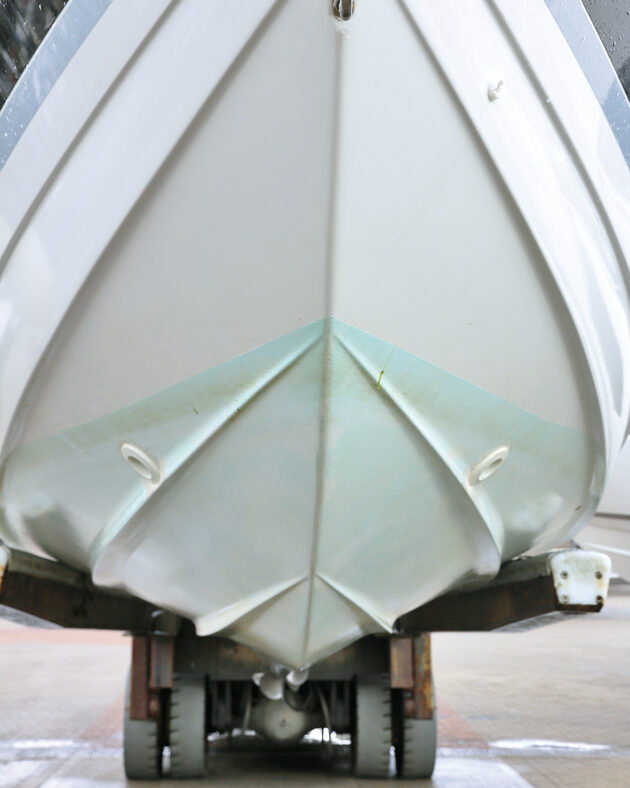
Skin fittings on either side of the bow act as both the inlet and outlet for the water jet
Corrosion resistant
The main benefit of this is that if anything does go wrong, such as a blockage or broken turbine blade, it can be cleared or replaced without needing to lift the boat out of the water.
If the problem can’t be sorted in situ, Sidejet even plan to offer a temporary replacement unit so the customer can carry on boating while the original is taken away to be fixed. The other advantage of mounting it above the waterline is that the water drains out when not in use, helping to prevent corrosion and fouling.
This happens naturally every time the boat rises up onto the plane but can also be done on the berth by opening a valve. On the production version there will also be a Hozelock adapter so owners can flush it through with fresh water.
A small vacuum pump automatically kicks in when the unit is switched on again to prime the waterjet. Driving the turbine blades is a small but highly efficient 48/60V digital motor running at up to 15,000rpm for a continuous output of 6.5kW (approx 8hp).
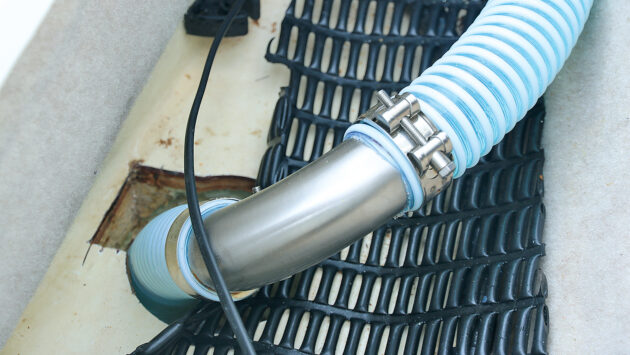
Flexible pressure hoses link the inlets/outlets to the jet
Similar to the waterjets found in electric boats, this is linked to a torpedo-shaped composite waterjet housing by a stainless steel shaft running through ceramic bearings and seals. The size and shape of the turbine blades are designed to prevent cavitation, delivering around 11.5kgf of thrust without the familiar racket of a traditional bow thruster.
By angling the skin fittings 10 degrees down, the jetstream is also directed under water, significantly reducing surface disturbance. To further simplify installation, each unit will be supplied with two handheld remote controls and a bracket so one of them can be used as a fixed controller.
The batteries in these will need replacing every few years.
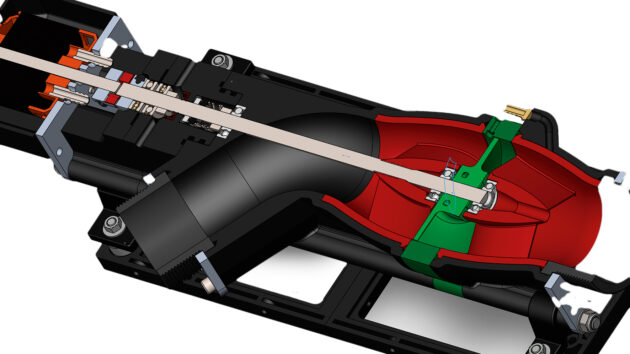
Water is drawn in through one side and ejected out the other, or vice versa
Test run
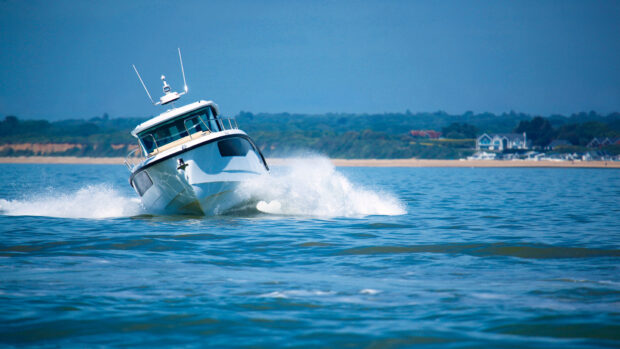
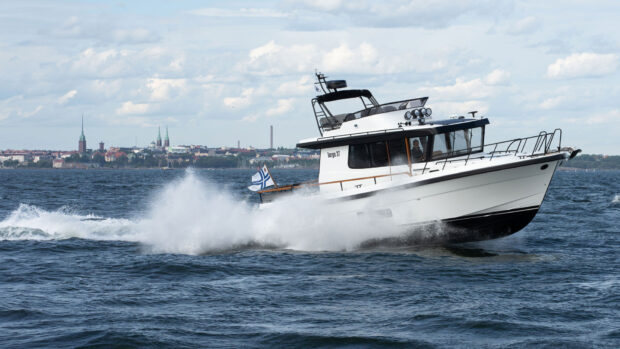
We were invited to sea trial the prototype on Steve’s own Formula 260 bow rider. As promised, the jet primed itself in a couple of seconds and was soon spinning away with a relatively discreet high-pitched whine.
You could just make out a thin jet of water streaming down and out from under the bow but there were no visible or audible signs of aeration or cavitation, just a steady sideways movement of the bow.
This wasn’t quite as fast or powerful as we had hoped, perhaps because we had drained quite a bit of power from the five relatively small 12V lead acid batteries during the photo shoot but also because the prototype’s skin fittings are angled too far down due to the deep vee of the Formula’s hull. By the time production versions are available in a month or two, Steve assures us this will be resolved.
The prototype
He also plans to offer two different sizes of Sidejet: the 11.5kgf unit shown here for craft up to 28ft and a 25kgf unit for boats up to 35ft. These will be supplied with stainless steel skin fittings, matching seacocks and all the necessary mounts, bar the vacuum hoses and batteries, so customers can spec them according to their needs.
Initially these will be assembled in house with a target starting price of £1,799 inc VAT. If this goes well, he also has plans to develop a quad-jet system that can move the boat in any direction, much like IPS but for a fraction of the cost.
 If you enjoyed this….
 If you enjoyed this….
Motor Boat & Yachting is the world’s leading magazine for Motoryacht enthusiasts. Every month we have inspirational adventures and practical features to help you realise your sailing dreams, as well as tests and news of all the latest motorboats.
Plus you’ll get our quarterly Custom Yachting supplement where we share the last on offer in the superyacht world and at the luxury end of the market.
Build your knowledge with a subscription delivered to your door. See our latest offers and save at least 30% off the cover price.
Note: We may earn a commission when you buy through links on our site, at no extra cost to you. This doesn’t affect our editorial independence.
Verdict
While not the first company to offer a waterjet based system (Jet Thruster has been doing it for years), GTD’s new Marine Sidejet appears to offer a number of advantages over both this and its propeller-based competition. The proof of the pudding will only become apparent once the finished product goes on sale. However, based on our initial test of the prototype it certainly has the potential and the credibility to shake up this corner of the market.