
When Stuart Robinson decided to rebuild his 1997 Hinckley Picnic Boat, he wasn’t going to settle for anything less than the full works
I’ve always loved boats, both sail and power, and have been lucky enough to own a number of different ones over the years. I sold my last motor boat, a Palm Beach GT60, a couple of years ago.
It was a beautiful boat that my wife and I cruised extensively in the US and the UK, but someone made me a good offer for it, and I decided to accept it while I pondered over what our next purchase might be.
In the meantime, I went in search of something smaller we could use locally in the Solent.
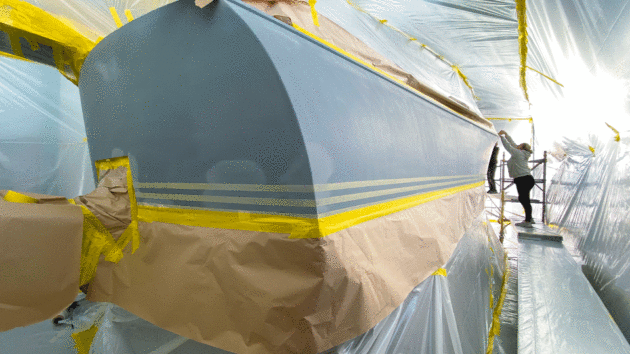
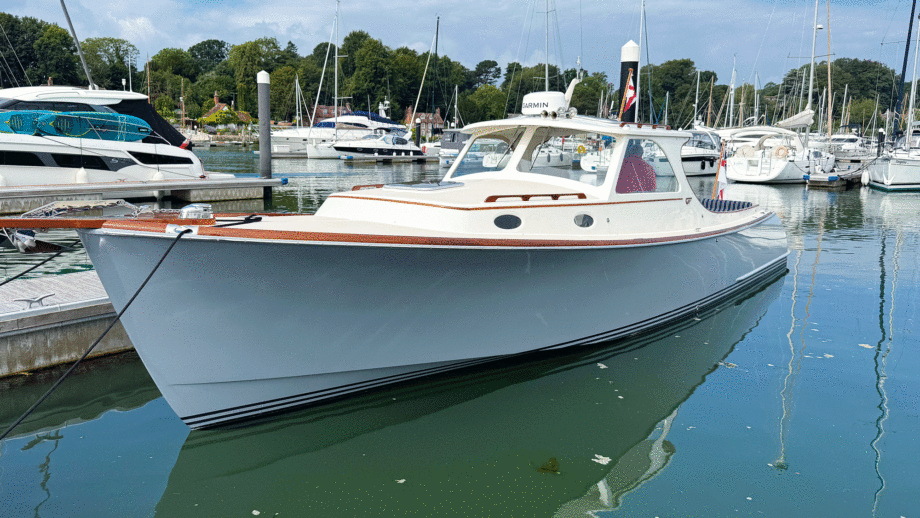
A full respray helped restore this 1997 Hinckley Picnic to as-new condition
We used to have a RIB for this and while it was fast and seaworthy, we often ended up getting cold and wet on the way home, so I wanted something that would give us a bit more protection. It still needed to be a good sea boat with a decent turn of speed and enough space to host family and friends during the day but also small enough for me to handle on my own. And as with all my boats, it had to be pretty to look at and properly built. Not much to ask, then!
As luck would have it, a fellow member of the Royal Yacht Squadron was selling a Hinckley Picnic Boat. It was a 1997 model called Picnic that wasn’t in great condition but ticked all the boxes. It had a good pedigree from a well regarded US boat builder, a proven hull design, timeless good looks and a layout that suited our needs.
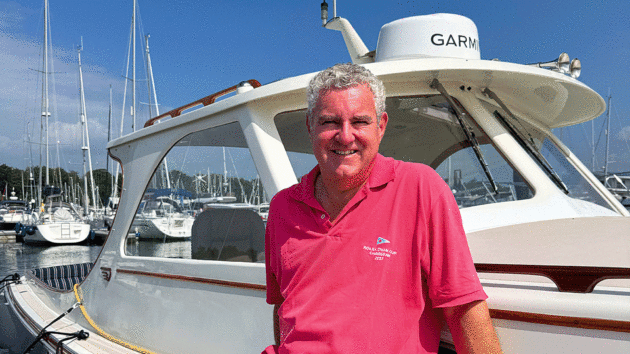
Owner Stuart is delighted with the finished result
The hardtop provided a good level of protection for the helm and co-pilot, but there was still a big open aft cockpit for day guests. It even had a small cabin and heads compartment so my wife Emma and I could stay onboard for a night or two at a time.
As with all Hinckley Picnic Boats, it had a waterjet drive, which I wasn’t too sure about, but I reckoned I could live with it given the advantages it offered in terms of speed, manoeuvrability and draft.
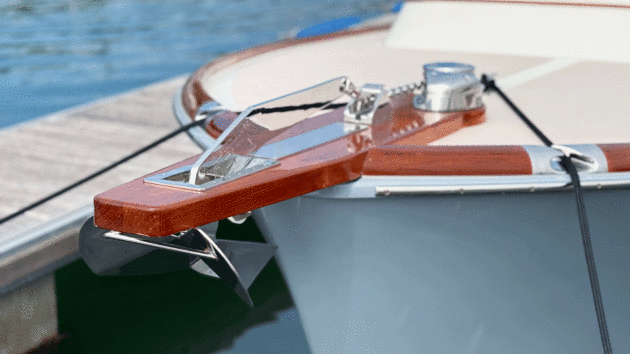
The bowsprit was custom made from teak to hold the anchor clear of the stem
A Lucky find: Spotting the Hinckley Picnic Boat
It was being sold through the UK Hinckley centre, Vortec Marine, and because of its age and condition the asking price was below £100,000. I knew it would need some work doing to it, but it was safe to use and everything was running ok. I made an offer, and before long, Picnic was mine.
I decided to run it for the rest of the season before having any work done. As well as making the most of the summer months, it would enable me to get to know the boat better and figure out what needed doing. I did, however, take the precaution of signing up to Sea Start, just in case!
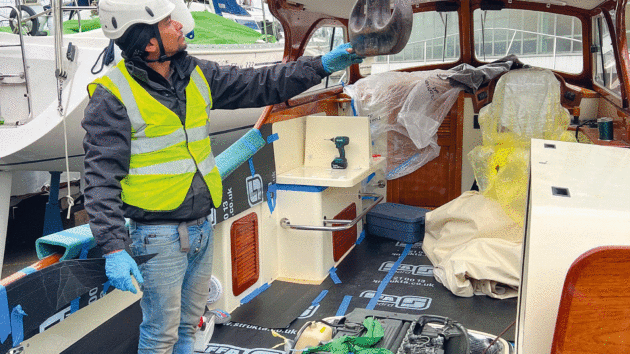
The new Yanmar 440hp is lowered into the engine bay
For the most part it performed as expected but as well as looking rather tired inside and out, there were a number of things that I wanted to get sorted.
The antifouling needed stripping off and redoing; all the varnishing was shot; the headlining was sagging; there were hairline cracks in the gelcoat; the helm and co-pilot seats were a bit ropey; and the only way of dropping anchor / anchor types was physically heaving it out of the locker and chucking it overboard. I was also concerned about the long-term reliability of the drivetrain.
If my wife and young adult children were ever going to have the confidence to take it out on their own, both they and I needed to know it would look after them. I asked Vortec to draw up a full schedule of works, including a new engine and waterjet. There didn’t seem much point in going to all the effort and expense of a refit and still being stuck with a near 30-year-old engine.
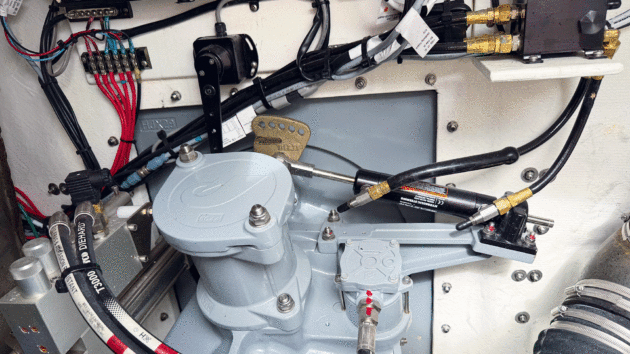
The new waterjet required a completely different transom mount
Richard Burlingham at Vortec had a good look at the boat and came back with his recommendations. Unfortunately it wasn’t quite as simple as we’d hoped; the hairline cracks in the topsides had actually penetrated through to the fibreglass beneath so the whole lot needed to be taken back and rebuilt before it could be repainted.
There were also signs of rot in some of the structural bulkheads due to water ingress in the bilges. And while the new 440hp Yanmar 6RY engine should be a relatively simple swap for the old one, replacing the waterjet was another story. Hamilton no longer made that model and the new one had a completely different transom and intake mount.
Needless to say, it all added to the expense but at this point half-measures weren’t really an option. I gave him the go-ahead and in October 2023 Picnic was lifted out for the work to be done over winter.
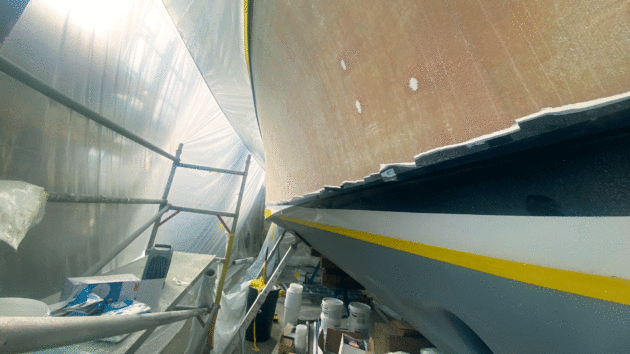
The topside gelcoat was ground back to the fibreglass matting
Sorting the topsides out went pretty much to plan. A gelplane was used to grind back the gelcoat, a thin layer of Biaxial cloth was then laminated to the existing fibreglass with epoxy resin to reinforce it before it was built back up again with three layers of Awlfair fairing and boarded back to leave a perfectly smooth surface.
A final layer of epoxy sealed it all in before being repainted in the same light grey Awlcraft colour I’ve had on all my boats. I think it adds a more modern look to the classic Hinckley lines and helps it stand out from all the other dark blue Picnic Boats out there.
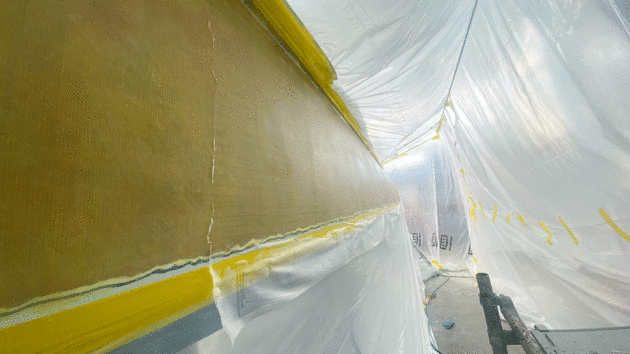
A new layer of biaxial cloth was epoxied on as an extra protective layer
Out with the old
The damp bulkheads proved rather more problematic. It appears that a drainage duct in the bottom of the bilges had split, allowing water to seep into the unsealed bulkhead holes which had then tracked up to the deck itself.
All these damp areas had to be cut out and a new drainage pipe bonded into place before the deck and bulkheads could be rebuilt. They also fitted new carbon stiffeners to the boat hull and laminated over the new conduit to ensure it wouldn’t leak in future.
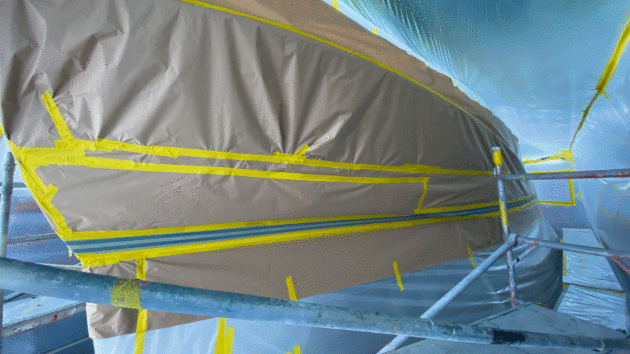
After applying the biaxial cloth, it was then filled and fared to leave a totally smooth painting surfaces
The only good news was that because we were also removing the engine, waterjet and tanks, the Vortec team had full access to all areas of the bilges. With everything out, the whole bilge area could be thoroughly cleaned, sanded and recoated with a resin gel wash to leave a completely clean surface.
Before that could happen, the transom had to be adapted to take the new waterjet. While the old jet had a round mounting plate, the new one was square and considerably larger. To accommodate this the transom had to be rebuilt with a special recess for the new mounting plates. As waterjets can go from full ahead to full astern without any gear box change, this also meant calling in a structural engineer to ensure it was strong enough to take the sudden change of loading.
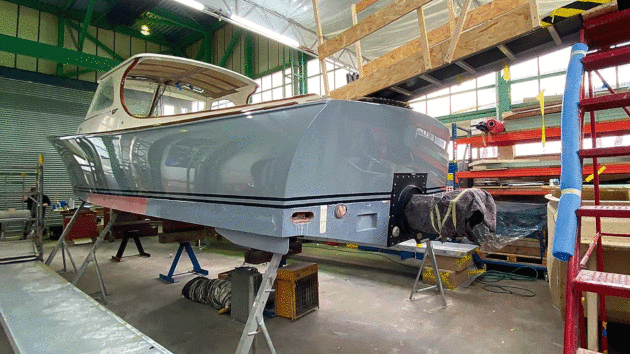
The entire transom had to be rebuilt with a specially shaped recess to accept the new drive
The water inlet underneath the hull was a bit simpler but still had to be remade in a different shape and size to accept the new mounting plates. It’s not something you want to get wrong when you’re cutting a big hole in the bottom of your boat! Inevitably the new engine also needed slightly different mounting beds so these had to be rebuilt as well, not to mention a new coupling and shaft to connect it up to the waterjet.
Much like a shaft- drive boat, this all had to be carefully aligned to ensure it was at exactly the high water and angle. New fuel and black-water waste tank were also fitted before the engine was installed to avoid any chance of them having to come out again.
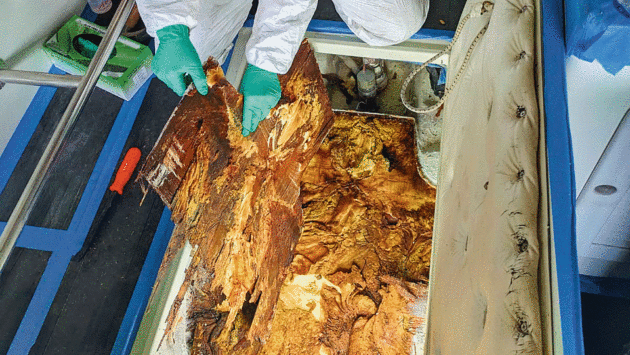
Soggy bulkheads had to be removed
The final piece of the re-engining jigsaw was fitting new helm controls. We’d intended to replace the original Hinckley jet-stick like for like but there was a six-month lead time before a new one could be delivered. Vortec suggested using a Glendinning system instead, which was not only easier to get hold of but roughly half the cost.
Full fly-by-wire throttle, steering and joystick controls now gives us fingertip control for both docking and cruising. Working out how to fit a satisfactory remote anchor mechanism was another mission. The Picnic’s upright stem means that a simple bow roller would risk the anchor flukes scratching the topsides every time it was deployed.
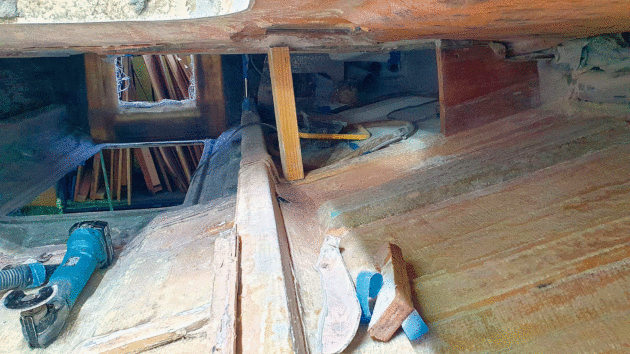
The refitters had to chock up the deck while a new water conduit was fitted
The only way to avoid this was by fitting a bowsprit that projected out far enough in front of the stem for the anchor to drop well clear of it. In the end, Vortec designed and made up a bespoke teak and stainless steel bowsprit with a matching Lewmar Delta anchor and windlass.
This did involve adding a new bulkhead and access hatch at the forward end of the cabin but the end result looks very neat and is so much safer and easier than dropping and retrieving it by hand. With the engineering now complete, the team could move onto the cockpit and interior changes.
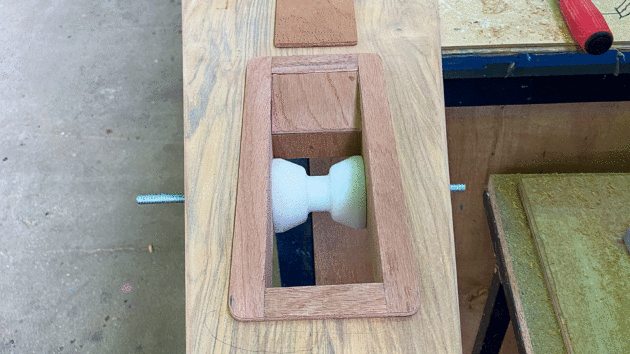
The bowsprit starts to take shape in Vortec’s wood shop
This was largely a refresh rather than a full refit, the one exception being the helm and navigator’s seats. The original layout had a basic pedestal helm seat on either side of the companionway. I decided to replace this with a more supportive electric Stidd helm seat to starboard and a back-to-back co-pilot seat to port. This would give us an extra aft-facing seat under the cover of the hardtop and create a more sociable layout in the cockpit.
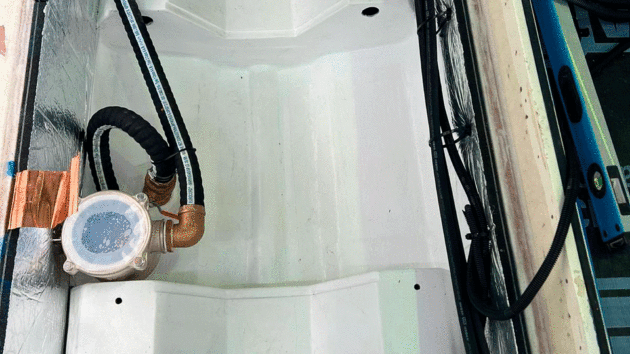
Once secure, new bulkheads and engine beds were installed
We also fitted Flexiteek decking throughout the cockpit and on the bathing platform, partly for aesthetic reasons but also because it’s softer and non-slip under foot than the previous moulded GRP.
While we were at it I asked for an extra grabhandle and transom shower to make climbing out and rinsing down after a swim easier.
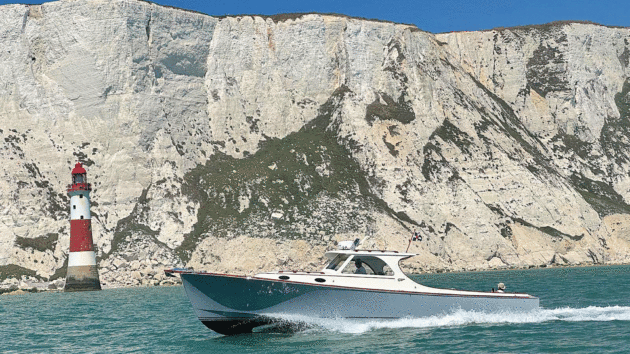
A revitalised Picnic should be good for another 20 years of use by Stuart and his family
Inside job
All the varnished exterior woodwork including the window frames, capping rails, cockpit table and companionway doors were sanded back to bare wood and 10 new coats of Awlwood applied. Vortec originally allowed 180 hours for this but it ended up taking 425, which thankfully they didn’t bill for!
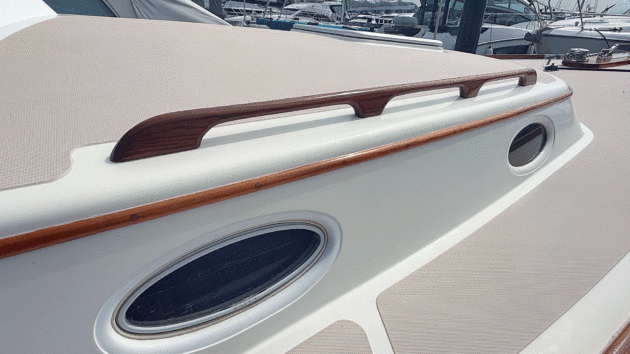
All the fittings were sanded back to bare wood and coated with multiple layers of varnish
The coachroof also had to be ground back, reinforced and repainted to repair some localised cracks and delamination. The final part of the equation was updating the interior fit-out. The sagging headlining was replaced with fresh vinyl and all the lighting inside and out was changed to LEDs.
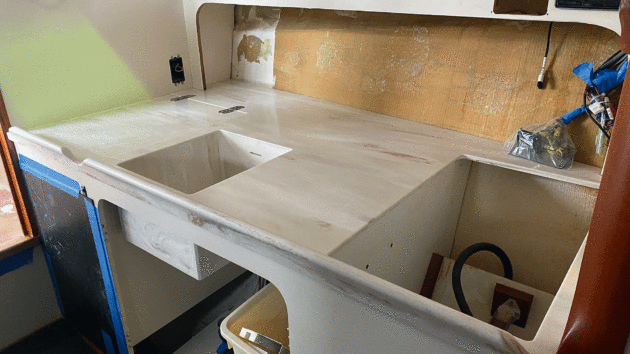
The galley worktop was machined to accept the existing fridge and hob
A new Tecma toilet was fitted in the heads along with new taps both here and in the galley. The old galley’s worksurface was also removed and a new Corian one fitted with cut-outs for the two ring hob, sink and best boat fridge. Lastly, the teak and holly floor was replaced.
I always knew it was going to be a bit of a mission to get the job done on time and on budget, and needless to say, costs did creep up, largely because of unseen complications that only became apparent once the engine and waterjet were removed.
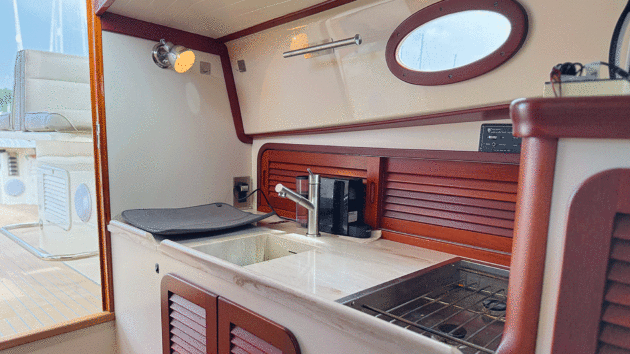
Modern Corian worktop and taps add a new lease of life to the original galley
The total refit ended up costing around £350,000 but it has totally transformed our enjoyment of the boat. My wife is now comfortable taking it out on her own, it’s a simpler and easier boat to helm and a safer one too thanks to the new anchoring mechanism.
It’s also a more comfortable boat to spend time on thanks to the new helm seat, heads and cockpit changes. I’m not sure it will have added that much to the secondhand value of the boat but that was never the intention.
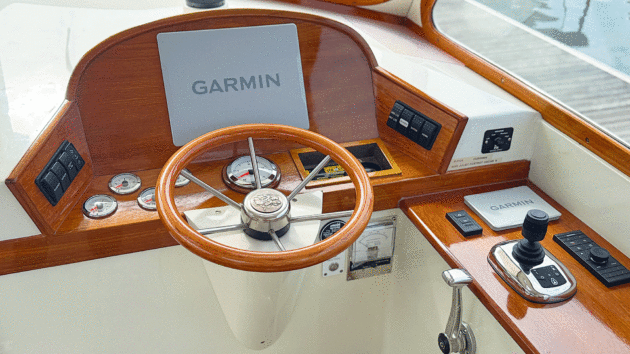
New fly-by-wire Glendinning throttle and joystick replace the original Hinckley items
What it has done is given us a craft that is now perfectly suited to our needs with all the style, quality and reliability of a brand new Hinckley Picnic for a fraction of the cost. We have taken it across the English Channel to Guernsey, cruised it up the Thames to Henley and back and are now planning to head off to the West Country for a week or two.
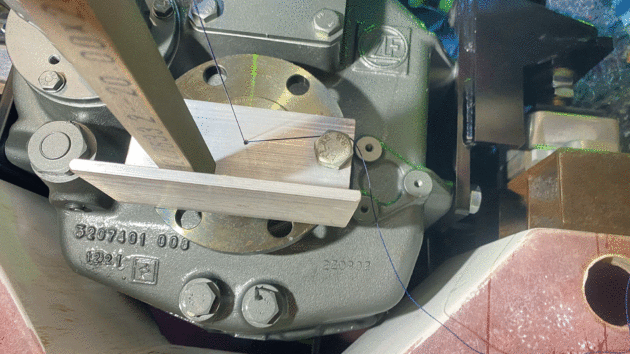
Measuring the shaft alignment between the engine and the waterjet
Giving it a new lease of life means it’ll be good for another 20 years and when we do decide to sell it, its timeless design means there will always be a ready buyer for it.
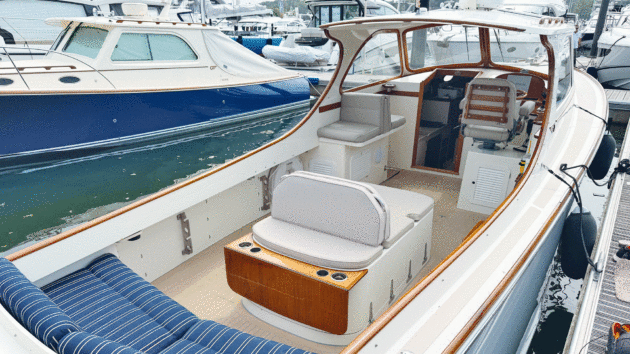
New Stidd captain’s chair and a back-to-back navigator’s seat add comfort and versatility
 If you enjoyed this….
 If you enjoyed this….
Motor Boat & Yachting is the world’s leading magazine for Motoryacht enthusiasts. Every month we have inspirational adventures and practical features to help you realise your sailing dreams, as well as tests and news of all the latest motorboats.
Plus you’ll get our quarterly Custom Yachting supplement where we share the last on offer in the superyacht world and at the luxury end of the market.
Build your knowledge with a subscription delivered to your door. See our latest offers and save at least 30% off the cover price.
Note: We may earn a commission when you buy through links on our site, at no extra cost to you. This doesn’t affect our editorial independence.