

Our resident boating expert, Jon Mendez takes us through his six point advice to fully understand how to use bouyage
Understanding buoyage and how to use it is crucial for safe navigation. Most countries use an inland and coastal system. Inland is usually from above the first sea lock. Coastal systems are further split into IALA A and B. The main difference is the colour of the marks as the shapes remain the same.
Area B covers the Americas, Japan, South Korea and the Philippines. In this area the port side of inbound channels is marked by green buoys, which are pillar-shaped, and show a green light (if lit). The starboard side is marked by cone-shaped red buoys and a red light.
Area A covers pretty much the rest of the world, including Europe, Australia and New Zealand. In this case the port side of inbound channels has red pillar or can-shaped buoys and red lights. Starboard has green cones and green lights. I find a simple reminder is that when your boat’s port and starboard navigation lights match the buoyage then you are travelling inbound into a port.
Both systems have safe water marks (red and white vertical stripes with a single red sphere on top and a white light) and isolated danger marks (red and black horizontal stripes with two black balls on top and a white light). They also have special marks (yellow with an X topmark and yellow light) and emergency wreck marks (yellow and blue vertical stripes with a vertical yellow cross as the top mark).
Article continues below…
Both systems have cardinal marks but they are rarely used in IALA B. Cardinal marks are used to show you where the safe water is around a potential hazard. They do this by the arrangement of the yellow and black colours, the cone-shaped top marks and a white light when lit.
At night they are differentiated by the timing of the lights. This is usually indicated by the small letters below the buoyage on a chart. On a plotter, you need to hover over the mark and press for more information.
If you are venturing out after dark, then a study of the light sequences is essential. The marks themselves are usually named or numbered and can be as small as 30cm high to 5m or more. Mostly they are floating cans but they could also be posts or even branches driven into the sea bed identified by the top mark and colour. Just remember, the smaller the mark, the less the channel is used, so always ask yourself does that confirm what I expect?
Buoyage is expensive to install and maintain, so, a bit like markings on the roads, the more markers there are, the more hazardous the area is and the more you need to pay attention.
The questions that you should ask yourself about every mark are: What is it warning or guiding me about? Does that apply to me? Where should I be in relation to it? And must I comply with the information given or is there sufficient depth for me to safely navigate outside of an area or channel. Here are the main buoys you need to be familiar with…
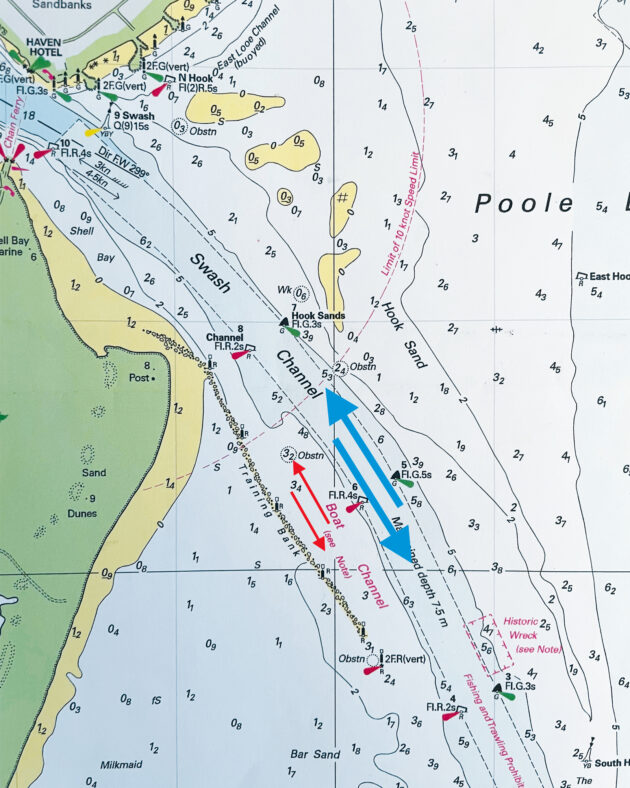
Channel choice
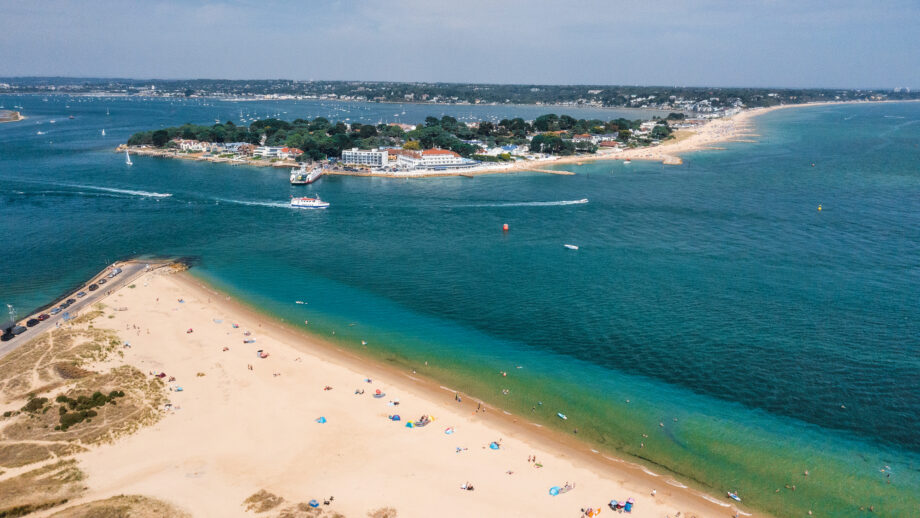
This chart shows the entrance to Poole harbour. There are two channels, the main Swash Channel (blue arrows) marked with large red and green buoys, and a smaller Boat Channel (red arrows) running alongside it marked with red posts. You can choose which one best suits the size of your craft.
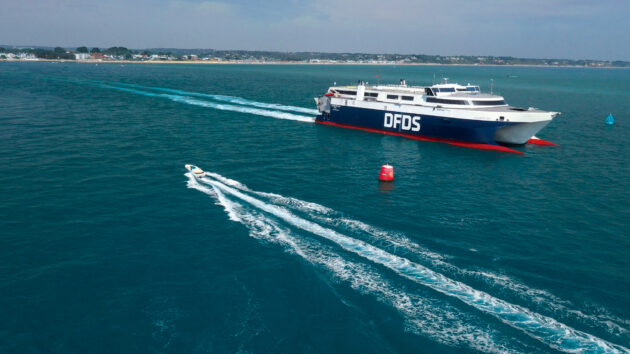
Photo: Richard Langdon
Size matters
You can see that the main Swash channel is about 200m wide and suitable for large ships and ferries, so depth permitting if you’re in a smaller craft it’s often prudent to navigate in the Boat Channel.
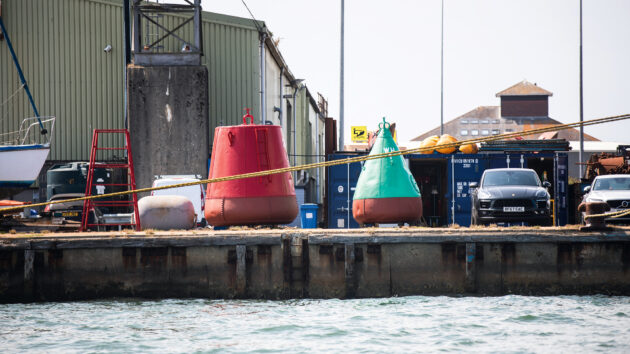
Channel markers
Port hand marks are red and ‘can’-shaped. Starboard ones are green and ‘cone’-shaped. These ones are ashore for repairs. Note the size of them in comparison to the car – they are huge!
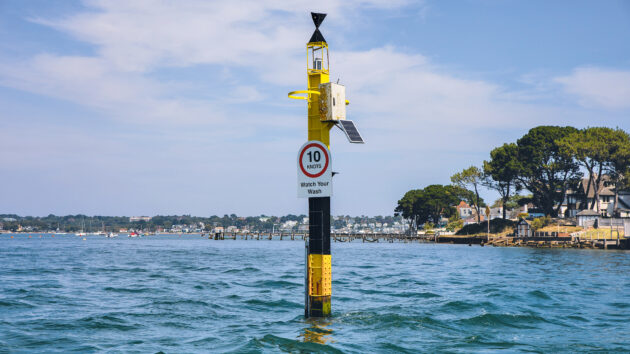
Cardinal mark west
This west cardinal mark is identified by the ‘waisted’ top mark and its yellow-black-yellow colour sequence. The safe water is to the west of it. East cardinals have an ‘egg’ shaped top mark and a black yellow-black colour sequence.
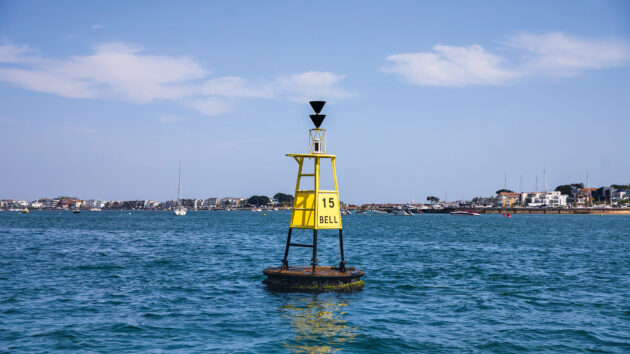
Photo: Richard Langdon
Cardinal mark south
This south cardinal mark is identified by its two top cones pointing downwards and yellow on top of black colour sequence, indicating safe water to the south. North ones have two cones pointing up and black over yellow.
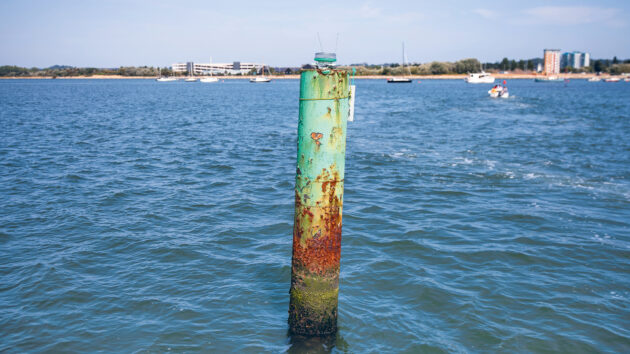
Photo: Richard Langdon
Lateral mark
This starboard hand lateral mark could do with a lick of paint but it’s still a valid navigation tool. There is no topmark but it does have a newly installed green light for night- time navigation.
 If you enjoyed this….
 If you enjoyed this….
Motor Boat & Yachting is the world’s leading magazine for Motoryacht enthusiasts. Every month we have inspirational adventures and practical features to help you realise your sailing dreams, as well as tests and news of all the latest motorboats.
Plus you’ll get our quarterly Custom Yachting supplement where we share the last on offer in the superyacht world and at the luxury end of the market.
Build your knowledge with a subscription delivered to your door. See our latest offers and save at least 30% off the cover price.
Note: We may earn a commission when you buy through links on our site, at no extra cost to you. This doesn’t affect our editorial independence.